ROOFERS, PAINTERS and decorators, joiners and builders facing problems with woodworm can call in specialist members of the Property Care Association (PCA) to carry out diagnostic investigations and ensure compliance, the national trade body has said.
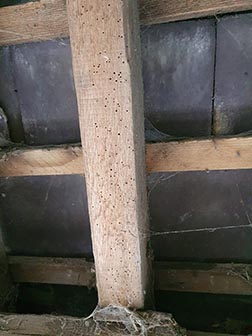
Woodworm refers to insects that feed on and destroy wood in the built environment, but while the trademark ‘dart board’ holes in wood are widely recognised, understanding whether an infestation is active or historic will dictate whether action is needed or not.
A specialist survey, carried out by a Certificated Surveyor of Timber and Damp in Buildings (CSTDB) PCA member, will establish if an infestation is active, what the causes may be, the scope of the problem and the most effective strategy for monitoring, control and eradication.
Paul Walker is technical manager at the PCA. He said: “Under COSHH, UK biocides and pesticides controls, timber treatment chemicals should not be used as a routine or precautionary measure without a clearly justified need. The need should be evidenced by assessment, such as evidence of active infestation or a justified preventive treatment requirement. Where there is no evidence of active infestation or justified preventive need, chemical treatment should not be recommended.
“Wood boring insects need a certain level of moisture in the timber to thrive, so it’s important that any sources of damp or moisture are taken into consideration and correct identification of the species is also crucial in determining how to tackle an active infestation.”
The common furniture beetle (Anobium punctatum) is the most abundant of the wood destroying insects found in buildings in the UK and, in the right conditions, it can infest a wide variety of timber products including structural building timbers and furniture. It is sometimes confused with the bark borer beetle, which will usually only attack any bark left on structural timbers, and powderpost beetles, which are found in unseasoned or recently dried hardwood. Almost as abundant as the common furniture beetle, the wood boring weevil restricts its activities to damp and partially decayed timber and is often found behind skirting boards and wall plates where fungal decay is present. With a preference for certain partially decayed hardwoods — mainly oak — the Deathwatch beetle is most often found in historic buildings such as churches and while its distinctive ‘variegated’ appearance and frass make identification easier, treatment can be particularly troublesome.
Paul added: “PCA contractors can offer treatment services with the benefit of a long-term guarantee and peace of mind that any remediation plan is in compliance with relevant legislation. Where a woodworm attack is so severe that the strength of the timber is affected, it may be necessary to replace the infested parts with new timber, which should be treated before use.”
See page 12 of our August/September 2026 issue on our Back Issues page.